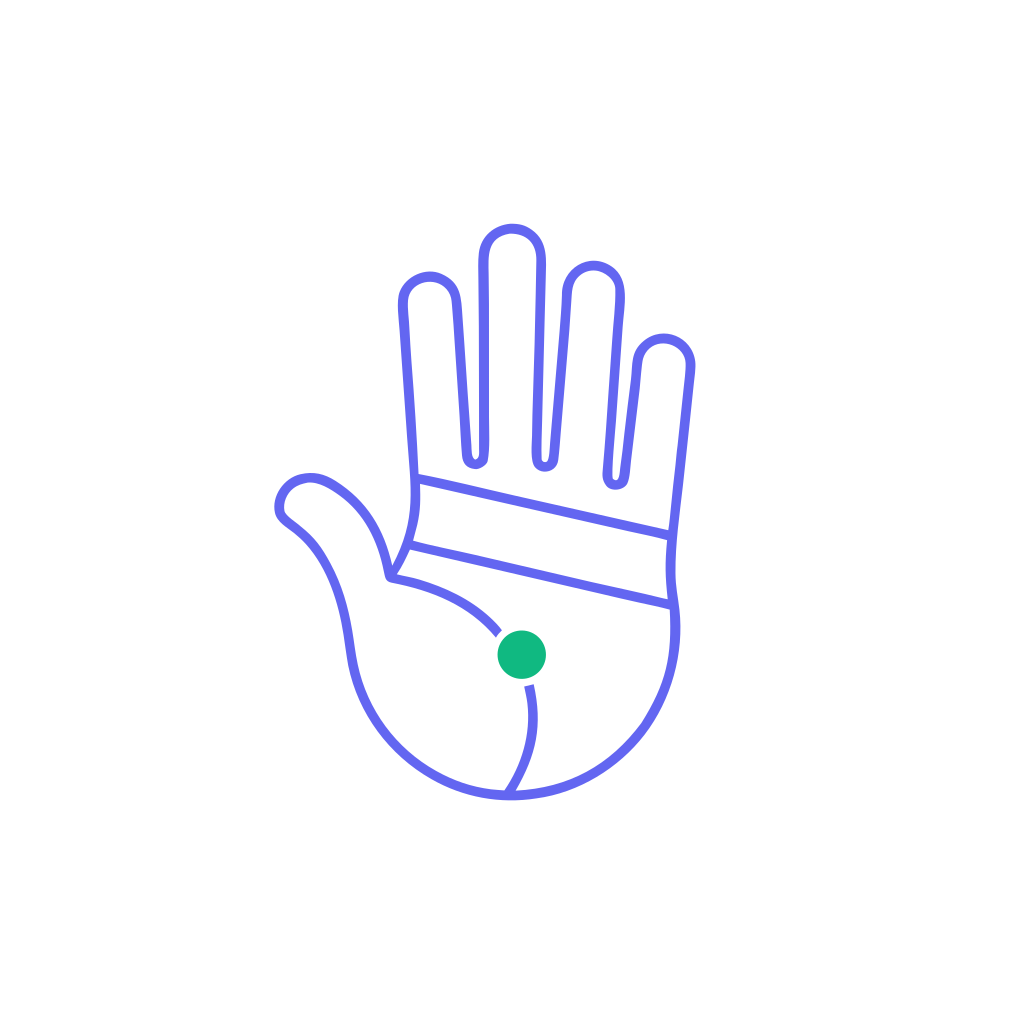
Which hand should you read in palmistry — the left or the right? This is the first question almost everyone asks, and the answer is simpler than most palm reading websites make it: read the dominant hand for the present, and the non-dominant hand for what you were born with.
That is the classical rule from Cheiro's Palmistry for All (1916), and it applies regardless of gender. The old myth that "women read the left hand, men read the right hand" is not found in any major classical source. Here is how the rule actually works, when to make exceptions, and what the differences between your two hands really mean.
The Classical Rule: Dominant vs Non-Dominant
Cheiro's rule is straightforward:
-
Dominant hand (the hand you write with) — shows your present-day life, career, relationships, and personality as you are living it now. This is the hand that reflects the changes you have made through choices, effort, and circumstances since birth.
-
Non-dominant hand — shows the traits, potential, and tendencies you were born with. This is your starting point — your innate character, natural talents, and the path that was available before you made your choices.
If you are right-handed, read your right hand first. If you are left-handed, read your left hand first. The non-dominant hand is the second read — it adds context by showing what you started with.
Why the Gender Rule Is Wrong
You will see many websites claim that for women, the left hand is the "active" hand, and for men, the right hand is. This is a modern invention — not found in Cheiro, not found in Mrs. J.B. Dale's Indian Palmistry (1895), and not followed by most professional palmists.
Cheiro writes explicitly that the dominant hand — regardless of gender — shows the present-day reading. He does not assign different hands to different genders. The gender-based rule likely came from a misreading of older texts that used "active" and "passive" to mean "dominant" and "non-dominant" — not "male" and "female."
If a palm reader tells you to read your left hand because you are a woman, they are following a modern myth, not the classical tradition.
What the Differences Between Your Hands Mean
The most informative part of a palm reading is often the comparison between the two hands. Here is what the differences tell you:
Hands are nearly identical
When both hands are nearly the same — same lines, same depth, same patterns — it marks a person whose life has stayed close to their innate potential. They are living in alignment with what they were born with. This is relatively uncommon, and when it appears, it usually marks a stable, consistent personality.
Dominant hand has stronger lines
When the dominant hand shows deeper, clearer lines than the non-dominant hand, it marks a person who has developed beyond their innate potential. They have built something through effort, choices, and circumstances that was not present at birth. This is a positive sign — it means the person has actively shaped their life.
Non-dominant hand has stronger lines
When the non-dominant hand shows deeper, clearer lines than the dominant hand, it marks a person who has not fully realized their innate potential. The potential was there from birth, but circumstances, choices, or lack of opportunity prevented it from being expressed. This is not a failure — it is a gap between potential and outcome that the person may still close.
Lines appear on one hand but not the other
When a line appears on one hand but not the other — say, a fate line on the non-dominant hand but not the dominant — it marks a trait or potential that is either unrealized (if on the non-dominant only) or newly developed (if on the dominant only). The presence or absence of specific lines on each hand is one of the most detailed readings in palmistry.
Applying the Rule to Each Line
The dominant/non-dominant rule applies to every line on the hand, but the interpretation shifts slightly for each:
Life Line
Dominant hand: your current vitality, health, and life path. Non-dominant hand: the vitality and life path you were born with.
Heart Line
Dominant hand: how you love and connect now. Non-dominant hand: your innate emotional nature.
Head Line
Dominant hand: how you think and make decisions now. Non-dominant hand: your natural intellectual tendencies.
Fate Line
Dominant hand: your current career and life direction. Non-dominant hand: the career path that was available before your choices shaped it.
Sun Line
Dominant hand: your current reputation and talent expression. Non-dominant hand: the natural talent or recognition potential you were born with.
Exceptions to the Rule
The dominant/non-dominant rule is the standard, but there are a few situations where the reading shifts:
Injuries or damage to the dominant hand
If your dominant hand is injured, scarred, or significantly different due to physical trauma, some palmists read the non-dominant hand as the primary. The logic is that the dominant hand's lines may be distorted by the injury rather than by life choices.
Career-specific readings
For career-focused readings, some palmists give extra weight to the fate line on both hands, regardless of dominance. The fate line on the dominant hand shows the current career; the fate line on the non-dominant hand shows the career potential — and both matter for a career reading.
Children and young people
For children and teenagers, the non-dominant hand is often more informative, because the dominant hand has not yet developed the lines that reflect adult choices. The non-dominant hand shows the potential that will unfold as the child grows.
Common Mistakes
Reading only one hand. This gives you half the picture. Always check both hands and compare.
Following the gender rule. The "women read left, men read right" rule is a modern myth. Use the dominant/non-dominant rule.
Assuming the non-dominant hand is "wrong." The non-dominant hand is not less important — it is a different kind of information. It shows where you started; the dominant hand shows where you are now.
Over-interpreting small differences. Minor differences between the hands are normal. Only pay attention to significant differences in line depth, presence/absence, or major markings.
Where to Go Next
Now that you know which hand to read, you can explore the specific lines:
- Life Line Palm Reading — vitality, health, and life path
- Heart Line Palm Reading — emotional life and relationships
- Fate Line Palm Reading — career direction and external influence
- Sun Line Palm Reading — reputation and talent
- Money Line Palm Reading — financial markers
For the full framework — hand shape, thumb, mounts, all lines, and the mistakes most beginners make — read the 9-step palm reading guide.
If you want a structured reading of your own palm in about a minute, scan your hand on the Scan page. It reads both hands and flags the differences.