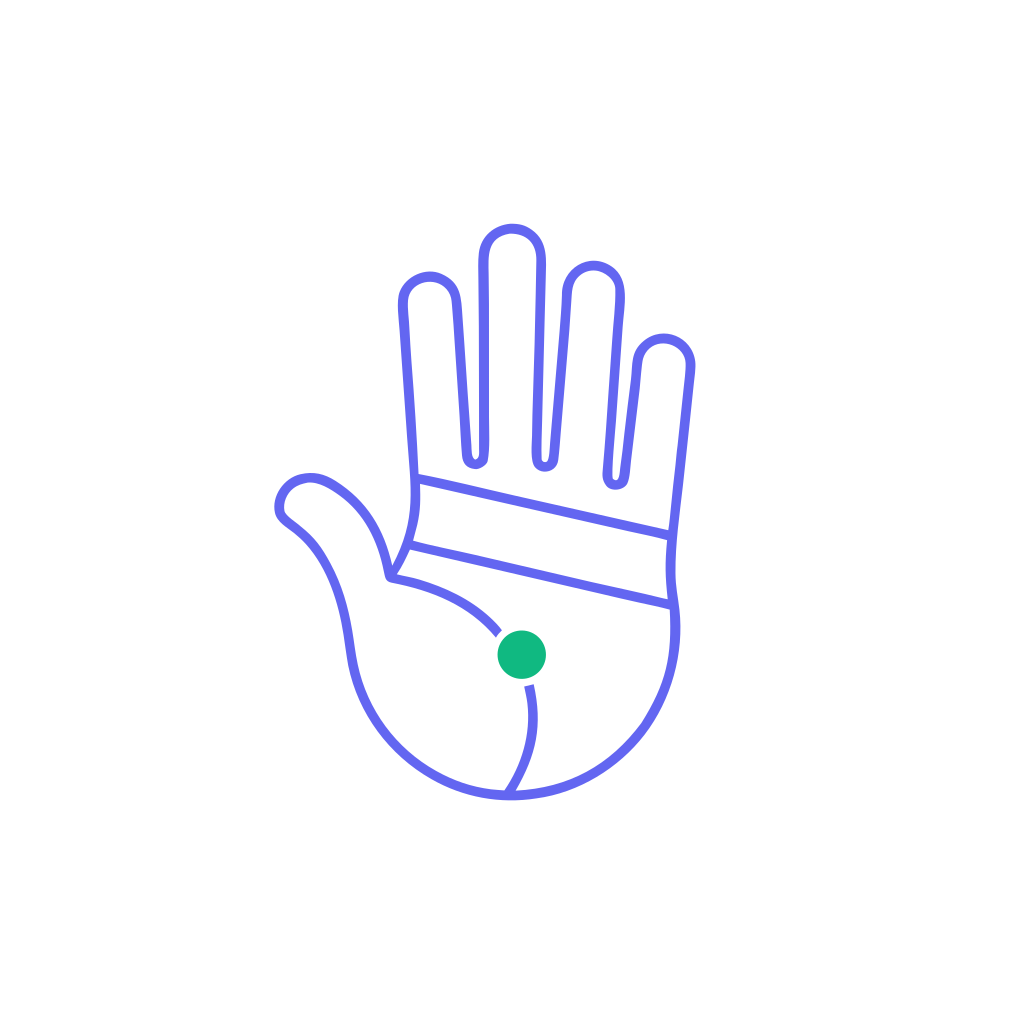
Want to read your own palm but not sure where to start? Palm reading looks complicated — hundreds of lines, mounts, symbols, and rules — but the basics are simpler than most websites make them. Here is a beginner-friendly guide to the five things to check first, in order, with no prior experience needed.
Step 1: Look at the Hand Shape
Before you look at any lines, look at the overall shape of the hand. This sets the foundation for everything else. There are four basic hand shapes, each associated with an element:
Earth hands — square palm, short fingers, thick skin. Practical, grounded, reliable. These people are good with their hands and prefer concrete work over abstract thinking.
Air hands — square palm, long fingers, dry skin. Intellectual, communicative, curious. These people are thinkers and talkers — good with ideas, sometimes restless.
Water hands — long palm, short fingers, soft skin. Intuitive, creative, sensitive. These people are emotionally driven and often artistic or empathetic.
Fire hands — long palm, long fingers, warm skin. Ambitious, energetic, passionate. These people are driven by action and achievement, sometimes impulsive.
Most hands are a mix — pure types are rare. But identifying the dominant shape tells you a lot about the person's basic nature before you even look at the lines.
Step 2: Check the Four Major Lines
The four major lines are the core of any palm reading. Here is what each one tells you, in the order you should read them:
Life Line
The life line curves around the base of the thumb, from the edge of the palm between the thumb and index finger down toward the wrist. It records vitality, health, and major life changes. A deep life line marks strong energy; a faint one marks more flexible energy. A break marks a significant life change — not death.
Common beginner mistake: Thinking a short life line means a short life. It does not. The life line records the quality and structure of life, not its length.
Heart Line
The heart line runs horizontally across the upper palm, from the edge under the little finger toward the index finger or middle finger. It records emotional life, relationships, and how you love. A deep heart line marks strong emotions; a faint one marks more guarded feelings.
Head Line
The head line runs horizontally across the center of the palm, usually below the heart line. It records intellect, decision-making, and thinking style. A deep head line marks strong analytical ability; a long head line marks broad thinking; a curved head line marks creativity.
Fate Line
The fate line runs vertically from the wrist toward the middle finger. It records career direction and external influence. Not everyone has one — its absence marks a self-directed path. A deep fate line marks a clear career; a faint one marks flexibility.
Step 3: Look at the Mounts
The mounts are the fleshy pads on your palm, each associated with a planet and a set of traits. You do not need to memorize all seven for a basic reading — just note which ones are prominent (raised and firm) and which are flat.
Prominent Mount of Venus (under the thumb) — warm, loving, passionate. Prominent Mount of Jupiter (under the index finger) — ambitious, confident, leader. Prominent Mount of Saturn (under the middle finger) — wise, serious, thoughtful. Prominent Mount of Apollo (under the ring finger) — creative, artistic, charismatic. Prominent Mount of Mercury (under the little finger) — communicative, witty, business-minded. Prominent Mount of Mars (center of the palm) — courageous, competitive, resilient. Prominent Mount of Luna (lower outer palm) — imaginative, intuitive, romantic.
Step 4: Compare Both Hands
This is the step most beginners skip — and it is one of the most important. Compare your dominant and non-dominant hands:
- Similar hands — you are living in alignment with your potential.
- Dominant hand has stronger lines — you have developed beyond your innate potential through effort and choices.
- Non-dominant hand has stronger lines — you have not fully realized your innate potential yet.
The differences between the two hands tell you more about the person than any single line.
Step 5: Note Special Markings
After the basics, look for any special markings on the lines:
- Breaks — interruptions or life changes
- Islands (small loops) — difficult periods
- Stars (asterisk-like marks) — sudden events, positive or negative
- Forks (line splitting) — dual paths or divided interests
- Chains (series of small loops) — ongoing difficulties or complexity
Do not over-interpret these. Most hands have a few minor markings that are not significant. Only pay attention to clear, well-defined marks on the major lines.
The Reading Order
For your first palm reading, follow this order:
- Hand shape — sets the foundation
- Life line — vitality and life path
- Heart line — emotional life
- Head line — intellect and thinking
- Fate line — career and direction
- Mounts — personality traits
- Both hands comparison — potential vs reality
- Special markings — notable features
Do not try to read everything at once. Start with hand shape and the four major lines. That alone gives you a solid reading.
Common Beginner Mistakes
Reading only one hand. Always check both hands and compare.
Thinking short life line = short life. It does not. The life line records quality, not length.
Over-interpreting small marks. Most markings on the hand are not significant. Only pay attention to clear, well-defined features.
Trying to memorize everything. You do not need to know all the symbols, mounts, and minor lines to do a basic reading. Start with the hand shape and four major lines.
Reading too fast. Take your time. A good palm reading involves looking carefully at each feature and noting how they relate to each other.
Where to Go Next
Once you have the basics, explore the specific lines in more detail:
- Life Line Palm Reading — the complete guide
- Heart Line Palm Reading — emotional life and relationships
- Fate Line Palm Reading — career and direction
- Sun Line Palm Reading — reputation and talent
- Money Line Palm Reading — financial markers
For the full 9-step framework — hand shape, thumb, mounts, all lines, dating method, and common mistakes — read the complete palm reading guide.
If you want someone (or something) to read your palm for you, scan your hand on the Scan page. It walks through the same classical framework and gives you a structured reading in about 30 seconds.