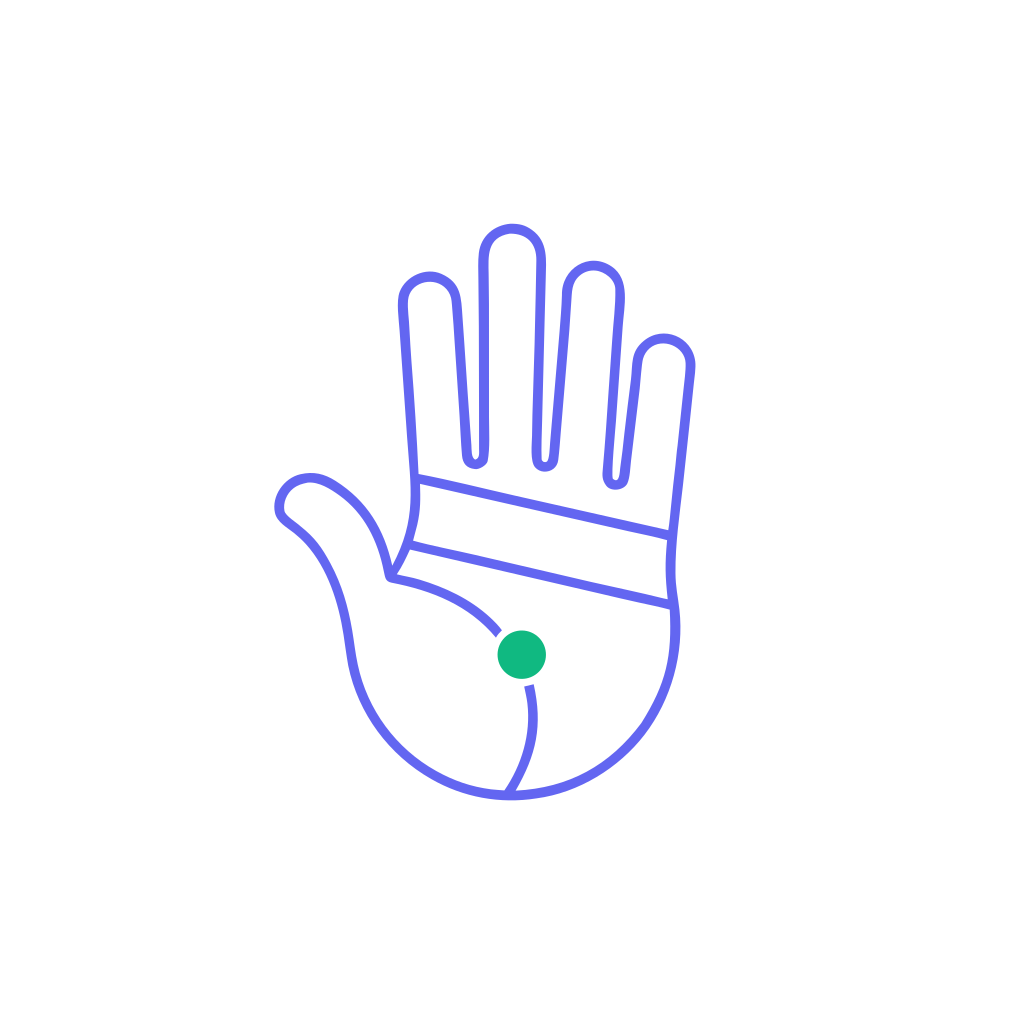
Does a broken life line mean you will die young? No. This is one of the most harmful and persistent myths in palmistry, and it causes unnecessary anxiety every day. A break in the life line does not predict death — it marks a significant life change. Here is what the classical tradition actually says, how to read different types of breaks, and why you should stop worrying about this one.
The Myth: Broken Life Line = Early Death
The idea that a broken life line predicts early death is not found in Cheiro's Palmistry for All (1916), not found in Mrs. J.B. Dale's Indian Palmistry (1895), and not supported by any classical palmistry authority. It is a modern myth that has spread through word of mouth, sensationalist websites, and well-meaning but misinformed amateur readers.
Cheiro describes the life line as recording "the general health, the vitality, and the major events of the life." He discusses breaks as markers of health events, major moves, career changes, and periods of disruption — not as death indicators. He explicitly warns against reading the life line as a predictor of lifespan.
The life line is one of the most changeable lines on the hand. It can deepen, fade, develop breaks, shift direction, and even disappear in sections over time. If it were a death predictor, it would need to be fixed at birth — and it is not.
What a Break Actually Means
A break in the life line marks a significant change or disruption in the person's life. The type of break tells you about the nature and severity of the change:
Clean break (gap)
A clean break — where the line stops and resumes with a visible gap — marks a dramatic life change. The person experienced a significant disruption and then rebuilt in a new direction. The gap itself marks the transition period — the time between the old life and the new one.
Common causes of clean breaks:
- A serious health event (illness, surgery, accident)
- A major relocation (moving to a new country or city)
- A career change (leaving a job, starting a business)
- A relationship change (divorce, separation, loss)
- A period of crisis followed by reinvention
Break with overlap
When the two segments of a broken life line overlap — running parallel for a short distance before separating — it marks an interruption followed by recovery. The person went through a significant change but regained their footing. The overlap is a positive sign of resilience.
This pattern is more common than a clean break and is generally read as a less severe disruption. The person experienced a change but had enough stability or support to transition through it without a complete break in direction.
Break with a bridge
Sometimes a small line or bridge connects the two segments of a broken life line. This marks a difficult transition that was bridged by effort, support, or circumstance. The person went through a hard time but found a way through — through help from others, through personal effort, or through fortunate timing.
Where the Break Falls
The position of the break along the life line gives you a rough idea of when the change occurred:
Near the thumb (start of the life line)
A break near the beginning of the life line — close to the thumb — marks a disruption in early life. This could be childhood illness, family upheaval, a difficult start, or a major move during childhood. It does not predict a short life. Many people with early breaks live long, full lives.
In the middle section
A break in the middle of the life line marks a mid-life change — a health event, career shift, or major life transition during the middle years. This is the most common position for breaks and often corresponds to the mid-life period when many people experience significant changes.
Near the wrist (end of the life line)
A break near the wrist — the end of the life line closest to the palm's base — marks a change that may come later in life. It does not mean the end of life. It marks a transition or disruption during the later years.
Breaks on Both Hands vs One Hand
The dominant/non-dominant rule from the main palm reading guide applies to breaks:
Break on both hands (same position) — more significant. The life change was deep and affected both the person's innate potential and their present reality. This is the pattern that warrants the most attention.
Break on dominant hand only — the change is likely self-directed. The person made a choice or took an action that caused the disruption. It may be a career change, a move, or a deliberate life shift.
Break on non-dominant hand only — the change may have been imposed by circumstances rather than chosen. It could be an illness, an accident, or an external event that disrupted the person's path.
The Life Line Is Not a Death Timer
This is worth repeating: the life line does not predict when you will die. No line on the palm can predict death. The life line records health, vitality, and major life events — not the length of your life.
The confusion comes from the life line's name. In many languages, the line is literally called the "life line," which makes people assume it predicts the length of life. But the name refers to the quality and structure of life, not its duration.
Cheiro writes: "The Line of Life is not, as so many people imagine, a line from which the length of life can be told." He describes it as recording "the general health and vitality" — not as a countdown timer.
What to Do If You Have a Break
If you have a break in your life line:
- Do not panic. A break marks a life change, not a life end. Many successful, healthy people have breaks in their life line.
- Look for the overlap. If the segments overlap, it means recovery and continuation. If there is a bridge connecting them, it means support or effort got you through.
- Check the other hand. If only one hand shows a break, the change may be self-directed or less severe than it appears.
- Remember that lines change. The life line is one of the most changeable features on the hand. A break today may develop into an overlap next year. Recheck periodically.
- Read it in context. A break in the life line means more when combined with other markers — a strong fate line, a clear head line, and well-developed mounts all suggest resilience and recovery.
Where to Go Next
For the full guide to the life line — its depth, direction, starting point, and all the patterns worth knowing — read the life line palm reading guide.
For the career side of the hand — the line that often crosses the life line — see the fate line guide. The fate line's relationship to the life line changes the meaning of both.
For the emotional side — how someone loves and connects — see the heart line guide. The life line records vitality; the heart line records the emotional life within that vitality.
If you want a structured reading of your own palm in about a minute, scan your hand on the Scan page. It reads the life line and flags any breaks, overlaps, or bridges it finds.